
You’ve checked your tyres before leaving home, and one of them is low again.
You pump it up, drive around Leicester for a few days, and the same tyre loses pressure.
But when you look closely, there’s no nail, screw or obvious damage.
So where is the air going?
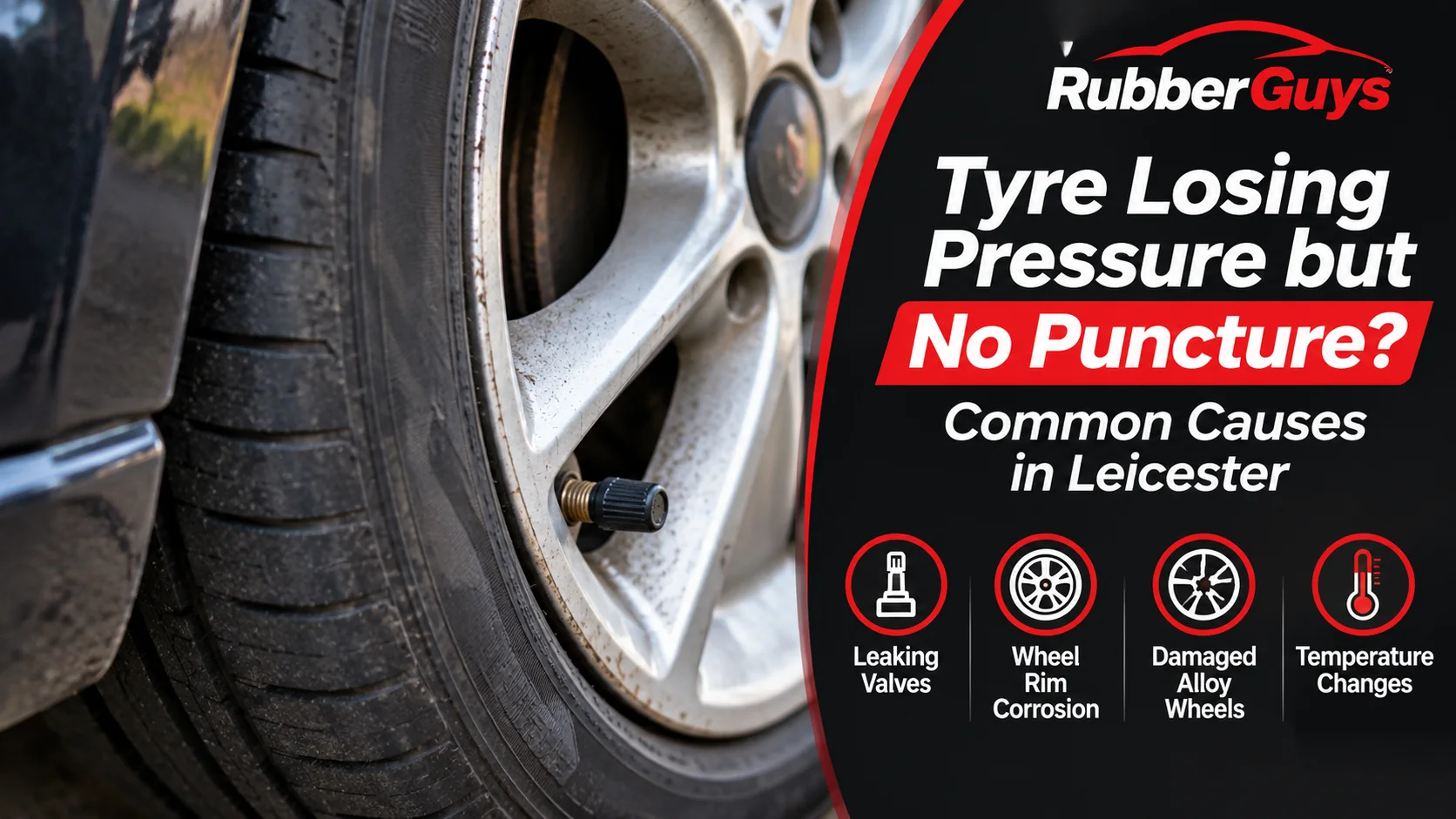
A tyre can lose pressure without having a traditional puncture. The problem might be the valve, the wheel itself or the seal between the tyre and the rim.
At RubberGuys in Leicester, we help drivers find the cause of tyre pressure loss rather than automatically recommending a replacement tyre.
1. A Leaking Tyre Valve
Every tyre has a valve that allows air to enter and stay inside.
Over time, the valve or its sealing components can become damaged, worn or loose.
This can allow air to escape gradually.
Common signs include:
- One tyre repeatedly losing pressure
- No visible damage to the tyre tread
- Air escaping around the valve area
- Pressure dropping shortly after inflation
Some vehicles also have tyre pressure monitoring sensors attached to the valves. These assemblies may require different parts and procedures from ordinary rubber valves.
Can it be fixed?
Often, yes. Depending on the valve type and condition, the valve or its sealing components may be replaceable without needing a new tyre.
A technician should inspect the valve before recommending a repair.
2. Corrosion Around the Wheel Rim
This is another possible cause, especially on older wheels.
The tyre forms an airtight seal against the wheel rim. This sealing area is called the bead seat.
If corrosion, dirt or surface damage develops around that area, air can gradually escape between the tyre and wheel.
You might notice the tyre losing pressure even though the tread looks perfectly normal.
What happens during a repair?
A garage may need to remove the tyre, inspect the wheel and clean the sealing surface where appropriate.
If the wheel is badly corroded, cracked or otherwise damaged, cleaning alone may not be sufficient.
The wheel must be safe and capable of maintaining an airtight seal.
3. A Damaged or Bent Alloy Wheel
Leicester’s roads, potholes and kerbs can sometimes be hard on wheels.
A heavy impact may bend or damage the wheel rim.
Even if the tyre itself hasn’t been punctured, damage to the rim can interfere with the seal and allow air to escape.
Possible warning signs include:
- Pressure loss after hitting a pothole
- Visible wheel damage
- Vibration while driving
- Air leaking around part of the rim
Not every damaged alloy wheel can be safely repaired.
If the wheel is cracked or structurally compromised, replacement may be necessary.
4. A Small Puncture That’s Difficult to See
Sometimes, there actually is a puncture — it’s just too small or awkwardly positioned to spot.
A tiny piece of metal might be embedded in the tread without being obvious.
The tyre may also leak only slowly, making the problem difficult to identify without testing.
A technician can check the tyre, valve and wheel assembly to locate the leak.
If a puncture is found, repairability depends on its position, size and the tyre’s overall condition.
Read more about our puncture repairs in Leicester.
5. Temperature Changes and Normal Air Loss
Tyre pressure changes with temperature.
When the weather gets colder, tyre pressure generally falls.
This is particularly noticeable during autumn and winter in Leicester.
Tyres also lose small amounts of air naturally over time.
However, there’s an important distinction:
If all four tyres have dropped slightly after a cold spell, temperature may be a contributing factor.
If one tyre keeps losing significantly more pressure than the others, a leak is more likely and should be investigated.
Check pressures when the tyres are cold and use the figures recommended by your vehicle manufacturer.
You can usually find them in the vehicle handbook or on a label inside the driver’s door area.
How Does a Garage Find an Air Leak?
Finding the leak is the first step.
Depending on the symptoms, a technician may:
- Check the tyre’s current pressure and visible condition.
- Inspect the tread and sidewalls for damage.
- Examine the valve and valve sealing area.
- Check the seal between the tyre and wheel.
- Use an appropriate leak-detection method to identify escaping air.
If necessary, the tyre may need to be removed from the wheel for further inspection.
The aim is to identify the actual cause before deciding whether a repair or replacement is needed.
Is It Safe to Drive With a Tyre That Keeps Losing Pressure?
Repeated pressure loss should never be ignored.
Driving with an underinflated tyre can cause:
- Reduced handling and stability
- Increased tyre wear
- Excessive heat buildup
- Internal tyre damage
- A greater risk of tyre failure
If your tyre is visibly flat, badly underinflated or losing air rapidly, don’t continue driving. Arrange roadside assistance or recovery if needed.
Even if the tyre seems to hold air for a few days, have the cause investigated promptly.
Continually inflating a leaking tyre is not a permanent solution.
Will I Need a New Tyre?
Not necessarily.
That’s why identifying the leak matters.
For example:
- Leaking valve: The valve or seal may be replaceable.
- Wheel bead leak: Cleaning and resealing may help if the wheel is in suitable condition.
- Small tread puncture: A repair may be possible following inspection.
- Sidewall damage: Tyre replacement is generally required.
- Severely damaged wheel: The wheel may need replacement.
If a tyre has been driven while seriously underinflated, internal damage may make it unsafe to repair even when the original leak appears minor.
At RubberGuys, we can explain the options once the problem has been inspected.
If you do need a replacement, we also offer tyre fitting in Leicester.
Frequently Asked Questions
Why does my tyre keep going flat overnight?
Possible causes include a puncture, leaking valve or a poor seal around the wheel rim. If it loses enough pressure to become flat overnight, don’t drive on it until the problem has been assessed.
Can a tyre leak air through an alloy wheel?
Yes. Corrosion, cracks, impact damage or a poor bead seal can allow air to escape around the wheel assembly.
Can a leaking tyre valve be repaired?
Often, the valve or relevant sealing components can be replaced. The correct solution depends on the type of valve and whether a tyre pressure sensor is fitted.
Should I keep putting air in my tyre?
Inflating a tyre to the manufacturer’s recommended pressure is part of routine maintenance, but repeated unexplained pressure loss needs investigation. Don’t rely on topping it up as a long-term fix.
Tyre Keeps Losing Pressure? Visit RubberGuys Leicester
If you’re constantly stopping at a petrol station to pump up the same tyre, it’s time to find out why.
At RubberGuys, we can inspect tyre pressure problems, check for leaks and explain whether the tyre or wheel needs attention.
We’re based at:
RubberGuys
45 Carlisle Street, Leicester, LE3 6AH
Call: 0116 403 0705
WhatsApp: Message us with your tyre size or vehicle registration and tell us how quickly the tyre loses pressure.
Whether it’s a leaking valve, a wheel seal or a hidden puncture, we’ll help you understand the next step.
RubberGuys Leicester — tyres, puncture repairs and friendly advice.